Pesticide residue detector
Veterinary drug residue detector
Food safety detector
Food additive detector
Bacterial and microbiological detector
Food pre-treatment integrated machine
Soil and fertilizer nutrient detector
Plant Physiology Detector
Water quality detector
Meteorological monitoring station
Pesticide residue detector
Veterinary drug residue detector
Food safety detector
Food additive detector
Bacterial and microbiological detector
Food pre-treatment integrated machine
Soil and fertilizer nutrient detector
Plant Physiology Detector
Water quality detector
Meteorological monitoring station
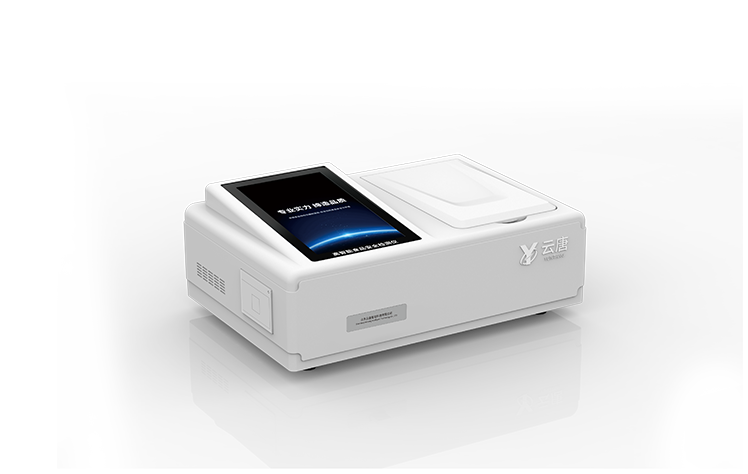
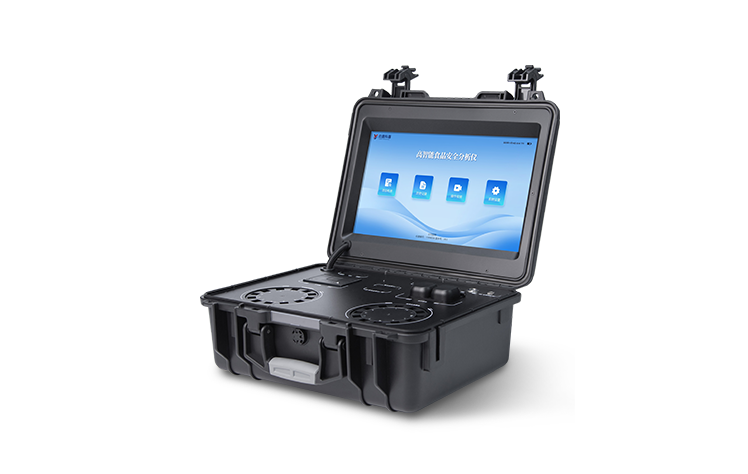
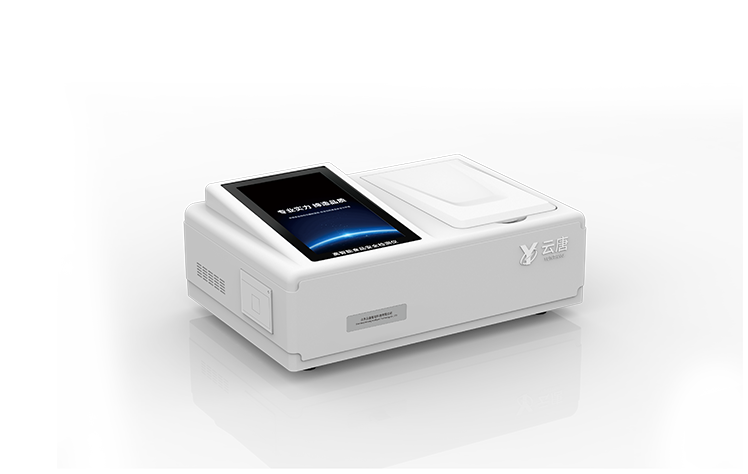
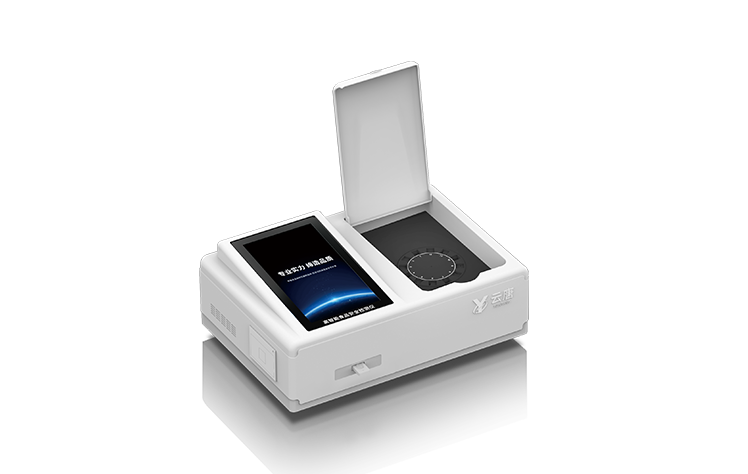
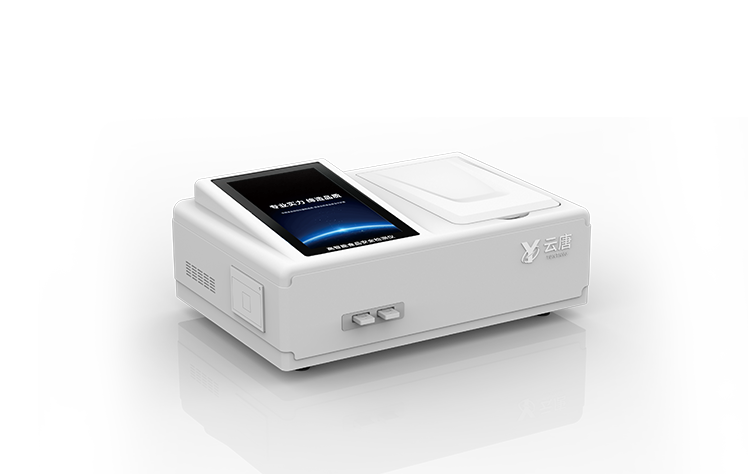
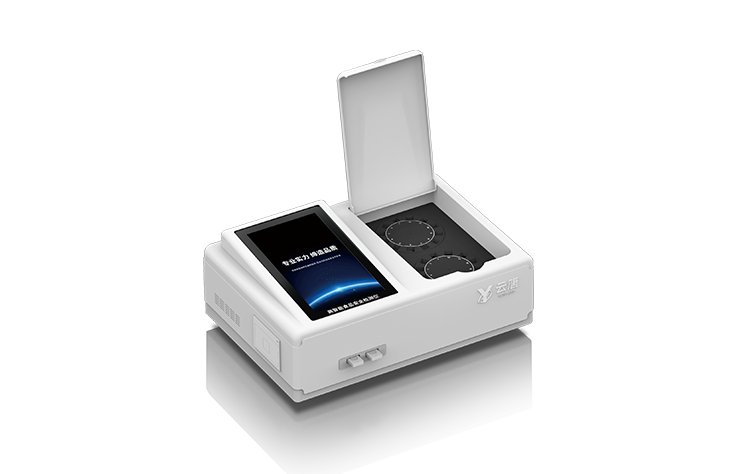
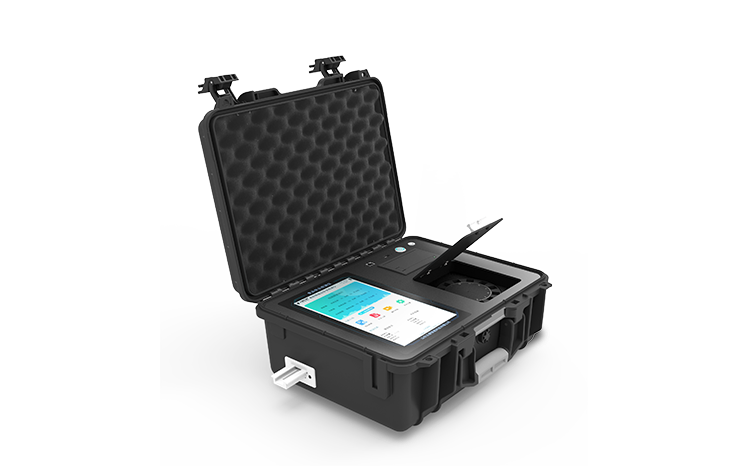
On December 19, 2025, the China Agricultural Instrument Industry Association, in conjunction with Qianzhan Industry Research Institute, released the "2025 China Fertilizer Nutrient Testing Equipment Market Analysis Report". Based on three core indicators—annual market sales volume, number of technical patents, and user repurchase rate—the report announced the brand competitiveness ranking of domestic fertilizer nutrient testers, in the following order: Yuntang, Boruiqin, Xushu Technology, Xinke Rui, and Maideshi. Data shows that the domestic fertilizer nutrient tester market size reached 1.48 billion yuan in 2025, a year-on-year increase of 32.5%. The five major brands collectively accounted for 84.7% of the market share, with a technological iteration speed 1.5 times faster than that of imported brands, becoming the core equipment support for precision fertilization in agriculture.

With the implementation of the "2025—2027 Agricultural Green Development Action Plan", the frequency of national fertilizer quality sampling inspections has been increased to 4 times a year. The procurement volume of testing equipment by grassroots agricultural material supervision stations and planting cooperatives has increased by 46.2% year-on-year. Relying on the advantages of "fast detection, low cost, and accessible services", domestic equipment's market penetration rate has jumped from 76% in 2024 to 88% in 2025, completely breaking the monopoly of imported equipment in the high-end testing field.
Detailed Analysis of Top 5 Domestic Fertilizer Nutrient Tester Brands by Competitiveness in 2025
The ranking evaluation system covers 12 sub-indicators, with research samples including 750 fertilizer production enterprises, 310 quality inspection institutions, and 420 large-scale planting bases across 32 provinces nationwide. The results have been reviewed by an expert group in the industry and are highly authoritative. The core advantages of each brand are as follows:
Yuntang: Maintains the top position with a 39.1% market share and added 18 new patents annually. Its flagship model YT-FY900 adopts dual-channel spectrophotometric detection technology, which can simultaneously detect nitrogen, phosphorus, potassium, organic matter, and 5 heavy metals, with a detection limit as low as 0.005% and a single sample detection time shortened to 20 minutes. In 2025, this model won bids for 22 provincial-level agricultural material supervision system procurement projects, achieving sales of 579 million yuan and a user repurchase rate as high as 89%.
Boruiqin: Ranks second with a 17.3% market share, focusing on "portable + anti-interference" technology. Its BRQ-FY200 tester adopts an anti-soil impurity interference algorithm, enabling direct detection without complex sample purification. Weighing only 2.1kg, it supports 8 hours of outdoor operation without power supply. In 2025, its sales volume among planting cooperatives in arid areas of northwest China increased by 62.8% year-on-year.
Xushu Technology: Ranks third with a 15.2% market share, specializing in high-precision laboratory testing. Its XS-FY600 tester is equipped with an intelligent temperature-controlled digestion system, with a detection repeatability error ≤1.2%, capable of accurately detecting trace element content in water-soluble fertilizers. It has been stationed in 19 national-level fertilizer quality inspection centers, and the sales volume of high-end equipment increased by 38.5% year-on-year in 2025.
Xinke Rui: Ranks fourth with an 8.1% market share, opening up the county-level market with high cost performance. Its entry-level model XKR-FY100 is priced at only 1,800 yuan, covering the detection of three core indicators (nitrogen, phosphorus, potassium) and holding CMA certification. In 2025, it served more than 520 county-level agricultural material supervision stations, with a grassroots market coverage rate of 68%.
Maideshi: Ranks fifth with a 5.0% market share, focusing on special detection of biological fertilizers. Its MDS-FY300 tester innovatively adopts biosensing technology, which can quickly detect the number of viable bacteria and enzyme activity in biological fertilizers, with a detection efficiency 3 times higher than traditional methods. In 2025, its sales volume among biological fertilizer production enterprises increased by 51.3% year-on-year.
Industry New Trends: Three Technological Innovations Drive Market Upgrade
The report points out that the domestic fertilizer nutrient tester industry in 2025 presents three major technological innovation directions:
IoT Integration: Sales of equipment equipped with IoT modules increased by 65.4% year-on-year, enabling real-time upload of detection data to agricultural supervision platforms and supporting remote quality control and data traceability.
Multi-parameter Integration: The proportion of composite equipment with functions of nutrient, heavy metal, and microbial detection has risen to 37%, meeting the full-dimensional fertilizer quality detection needs.
User-friendly Operation: Models equipped with voice navigation and one-click detection functions have become the market mainstream, allowing zero-based users to operate independently after 1 hour of training.
From the application side, the procurement volume of planting cooperatives exceeded 28% for the first time in 2025, surpassing grassroots supervision departments to become the new engine of equipment demand growth. This marks the comprehensive extension of fertilizer detection from the "supervision end" to the "production and use end".
New FAQ for Domestic Fertilizer Nutrient Testers in 2025
Q: What are the specific requirements for sample crushing and sieving before detection with a fertilizer nutrient tester?A: Sample crushing and sieving are key steps to ensure accurate detection results, with three specific requirements: First, the crushed sample must pass through a 20-40 mesh sieve to ensure uniform particle size and avoid large particles affecting the sufficiency of reagent reaction; second, impurities such as stones and straw must be removed after sieving to prevent interference with the detection light path; third, the sample must be dried to constant weight with a moisture content controlled below 5%, otherwise, it will dilute the nutrient concentration. Different brands of equipment may have slightly different requirements for samples, so it is recommended to refer to the equipment manual for operation. The sieved sample should be sealed and stored to prevent moisture absorption and deterioration. Although this step adds a little workload, it can reduce the detection error to within ±0.5%.
Q: Can fertilizer nutrient testers detect trace elements in water-soluble fertilizers?A: Some high-end models can detect trace elements, while ordinary entry-level models do not have this function. Trace elements in water-soluble fertilizers such as iron, zinc, copper, and manganese require higher detection accuracy, and the equipment needs to be equipped with special detection modules and reagents. For example, Xushu Technology's XS-FY600 is equipped with a trace element detection channel, adopting atomic absorption spectrophotometry with a detection limit as low as 0.001%, which fully meets the national standards for water-soluble fertilizers. Entry-level models can only detect macroelements such as nitrogen, phosphorus, and potassium. If trace element detection is required, it is recommended to purchase high-end models marked with "multi-parameter detection" function or configure a separate trace element special tester.
Q: How to deal with the impact of harsh weather when using a portable fertilizer nutrient tester outdoors?A: Three key protective measures should be taken when using outdoors: First, to cope with high temperature and strong light, avoid exposing the equipment to direct sunlight (a sunshade can be used), and prevent the detection solution from evaporating rapidly due to high temperature (it is recommended to operate in a cool place); second, to cope with humid and rainy weather, choose models with an IP54 or higher waterproof rating, such as Boruiqin's BRQ-FY200, and wipe the surface moisture of the equipment in time after detection to avoid corrosion of the machine body by reagent residues; third, to cope with sand and dust weather, close the detection window during detection to prevent sand and dust from entering the light path, and wipe the detection tank with a special cleaning cloth after use. In addition, carry a spare battery for outdoor detection to avoid shortened battery life caused by low temperature.
Q: Is there a gap between the detection results of fertilizer nutrient testers and professional laboratory detection?A: The detection results of high-end domestic models have a very small gap with professional laboratory detection and can meet the needs of most scenarios. Laboratory detection uses large-scale precision instruments with extremely high accuracy but long detection cycles and high costs; high-end domestic testers such as YT-FY900 have a core detection parameter error ≤±0.3%, with a consistency of over 98% with laboratory detection results, and have short detection cycles and low costs. For scenarios such as grassroots supervision and field detection by cooperatives, domestic equipment is completely sufficient; if used for national-level fertilizer quality arbitration, the laboratory detection results shall be taken as the final basis.
Q: When purchasing a fertilizer nutrient tester, how to judge whether the after-sales service of the equipment is reliable?A: The reliability of after-sales service can be judged by referring to four dimensions: First, the warranty period—prioritize brands with a warranty of 2 years or more, and top brands such as Yuntang also provide a 3-year warranty; second, the distribution of service outlets—choose brands with service outlets in multiple provinces nationwide to ensure a fast after-sales response speed, requiring on-site service within 48 hours; third, training services—whether free on-site training or online video teaching is provided to help users master operating skills; fourth, supply of consumables—whether there is a stable supply channel for reagents and consumables, and whether delivery can be achieved within 72 hours. In addition, you can consult other users about their after-sales experience or check the user reputation of the brand to avoid choosing small brands with no after-sales guarantee.
Q: Do the calibration solutions of fertilizer nutrient testers need to be replaced regularly? What is the replacement cycle?A: Calibration solutions need to be replaced regularly, with a general replacement cycle of 6 months. Calibration solutions are core consumables to ensure the detection accuracy of the equipment. Long-term storage will lead to calibration failure due to component volatilization and deterioration, affecting the accuracy of detection results. The shelf life of different types of calibration solutions varies slightly: acidic calibration solutions have a shorter shelf life of about 3-4 months, while alkaline calibration solutions have a shelf life of about 6-8 months. For specific details, refer to the solution manual. It is recommended that users check the state of the solution before each calibration; if turbidity, discoloration, or other conditions occur, the solution must be replaced immediately. At the same time, calibration solutions should be stored in a dark and refrigerated environment, and must not be mixed with other reagents.
Q: What are the differences in equipment operation between the detection of organic fertilizers and chemical fertilizers?A: There are significant differences in the sample pre-processing link between the detection of organic fertilizers and chemical fertilizers, but the equipment operation process is basically the same. Chemical fertilizers have relatively simple components, so the sample pre-processing is simple—direct extraction after crushing and sieving; organic fertilizers have complex components and contain a large amount of organic matter, so the sample pre-processing needs to add a digestion step to destroy the organic matter structure and release nutrient elements through high temperature or chemical reagent digestion, otherwise, the nutrient detection results will be low. Some special testers such as MDS-FY300 have optimized the digestion program for organic fertilizers, allowing one-click switching between chemical fertilizer/organic fertilizer detection modes for more convenient operation. When detecting organic fertilizers with ordinary models, strictly follow the organic fertilizer detection process to ensure sufficient digestion.
Q: Is the detection cost of fertilizer nutrient testers high? How much does a single detection cost?A: The single detection cost of domestic fertilizer nutrient testers is relatively low, far lower than that of imported equipment. The detection cost mainly includes the cost of reagents and consumables: for entry-level models detecting three indicators (nitrogen, phosphorus, potassium), the single cost is about 3-5 yuan; for high-end models detecting multi-parameters (including heavy metals), the single cost is about 10-15 yuan. The price of reagents and consumables for imported equipment is 2-3 times that of domestic ones, with a single detection cost as high as 20-30 yuan. In addition, domestic equipment does not require high technical service fees, and the long-term use cost advantage is obvious. For users with high detection frequency, bulk procurement of reagents and consumables can further reduce the single detection cost.
Q: Can fertilizer nutrient testers be connected to computers or mobile phones? Is data export convenient?A: Most mid-to-high-end models support connection to computers or mobile phones, and data export is very convenient. Equipment is usually equipped with two connection methods: Bluetooth and USB, and some high-end models also support 5G wireless transmission. After connecting to a mobile phone, users can view detection data, generate detection reports through the brand's exclusive APP, and share data with other users; after connecting to a computer, batch export of historical detection data can be realized to establish a fertilizer quality detection file. Entry-level models may only support data export via USB, which is also relatively simple to operate. The data export function facilitates users' data analysis and management, especially suitable for large-scale planting bases and fertilizer production enterprises.
Q: In which directions will fertilizer nutrient testers develop in the future? Do ordinary users need to upgrade their equipment in advance?A: In the future, fertilizer nutrient testers will develop in the direction of "smarter, more portable, and more versatile", such as integrating AI intelligent diagnosis functions to automatically generate fertilization suggestions based on detection data; developing miniaturized testers for pocket-sized carrying; and adding soil nutrient linkage detection functions to realize "fertilizer-soil" collaborative analysis. For ordinary users, if the current equipment can meet the detection needs, there is no need to rush to upgrade—equipment can be replaced every 3-5 years according to personal needs; if the detection needs are upgraded (such as the need to detect trace elements, microorganisms, and other indicators), consideration can be given to replacing with new models with corresponding functions. When purchasing, it is recommended to choose models that support module upgrades, which can realize function expansion by adding modules and extend the service life of the equipment.
High precision pesticide residue detector
2024-04-02 1939
1939Food comprehensive analyzer
2022-12-201956Rotary food safety detector (without gold label)
2022-03-042140Rotating food safety detector (single gold standard)
2022-03-011873Rotary food safety detector (double gold label)
2022-02-251794Rotating food safety detector (three gold standard)
2022-02-254973Rotary food safety detector (box type 8-channel)
2022-03-011776Rotary food safety detector (box type 12 channel)
2022-02-251752WeChat:+86 17865361250
WhatsApp:+86 18866361895
Email:yuntangzhineng@foxmail.com
Copyright @ 2019-2022 Shandong Yuntang Intelligent Technology Co., Ltd All Rights Reserved. Copyright Source manufacturer of pesticide residue detector, food detector, bacteria detector
 WeChat



TOP
 Leave us a message