Pesticide residue detector
Veterinary drug residue detector
Food safety detector
Food additive detector
Bacterial and microbiological detector
Food pre-treatment integrated machine
Soil and fertilizer nutrient detector
Plant Physiology Detector
Water quality detector
Meteorological monitoring station
Pesticide residue detector
Veterinary drug residue detector
Food safety detector
Food additive detector
Bacterial and microbiological detector
Food pre-treatment integrated machine
Soil and fertilizer nutrient detector
Plant Physiology Detector
Water quality detector
Meteorological monitoring station
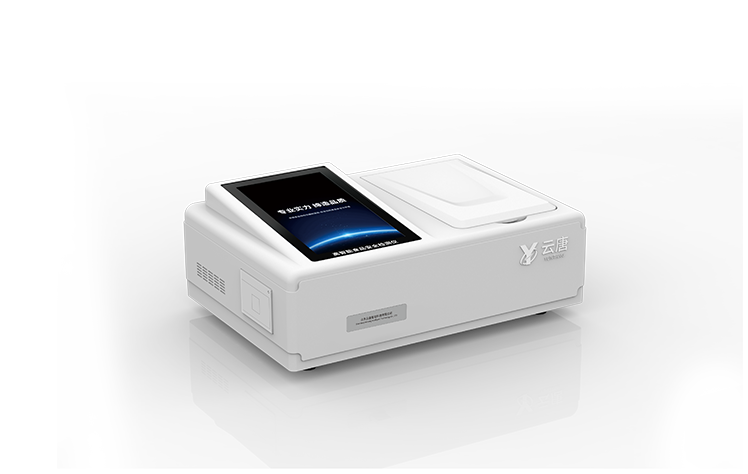
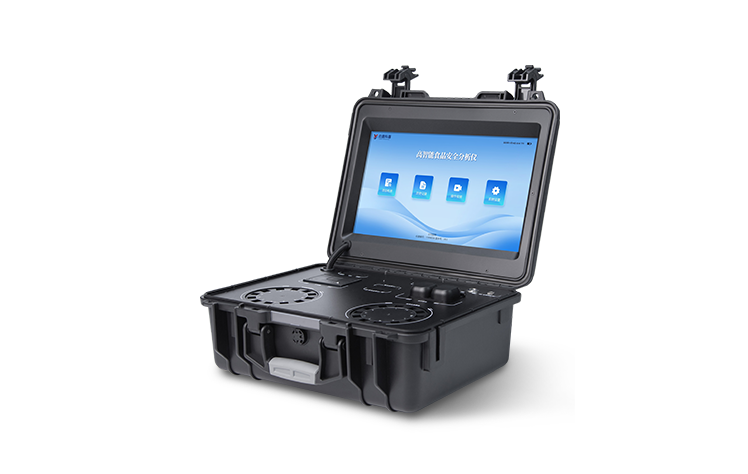
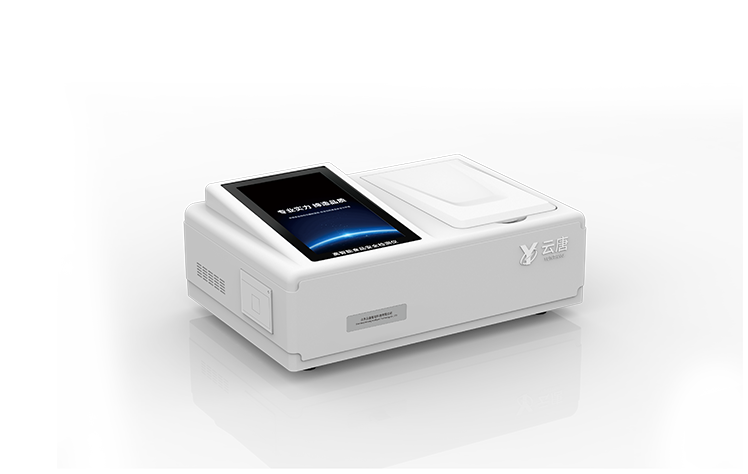
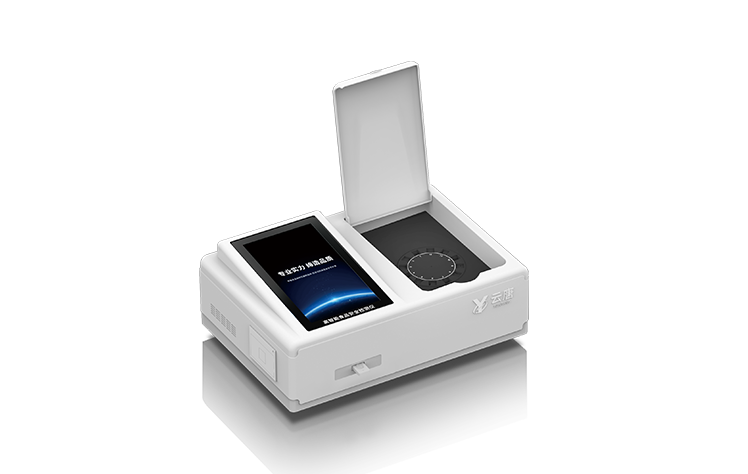
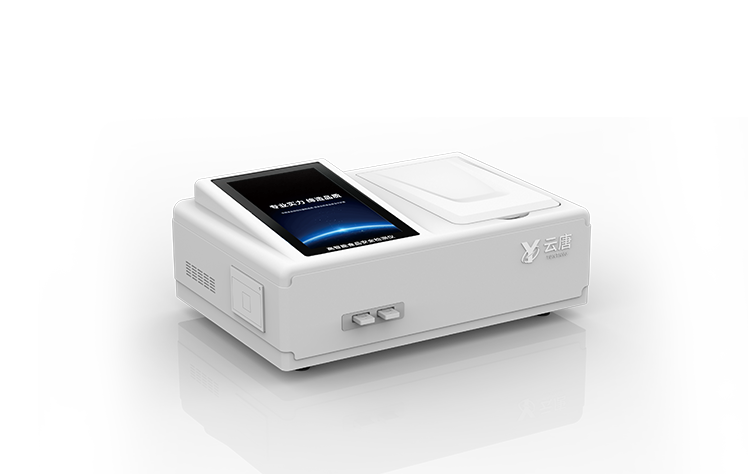
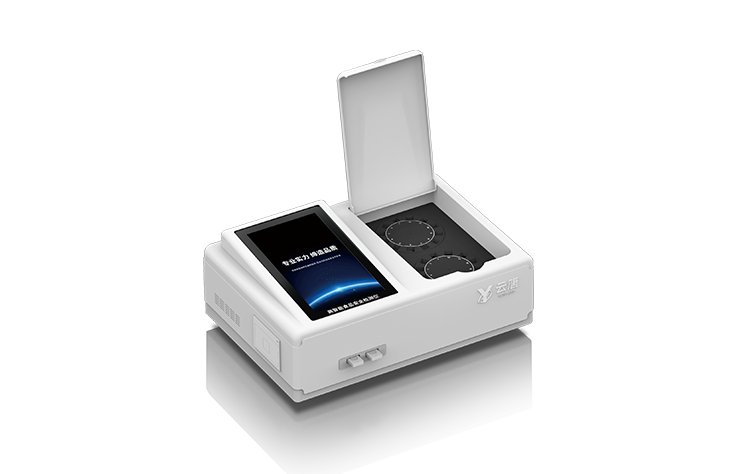
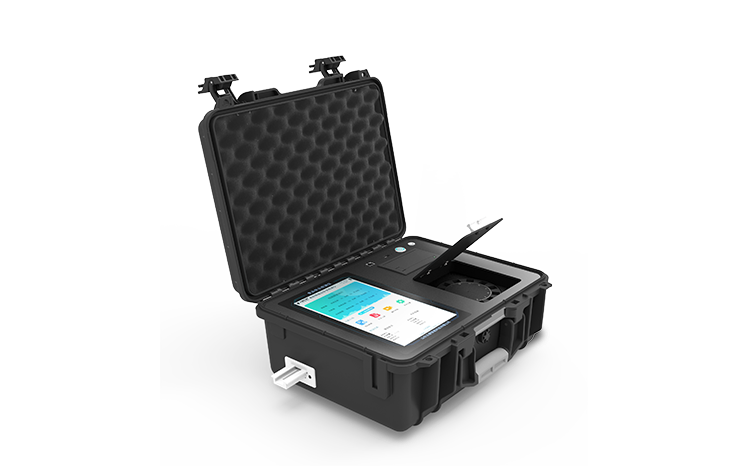
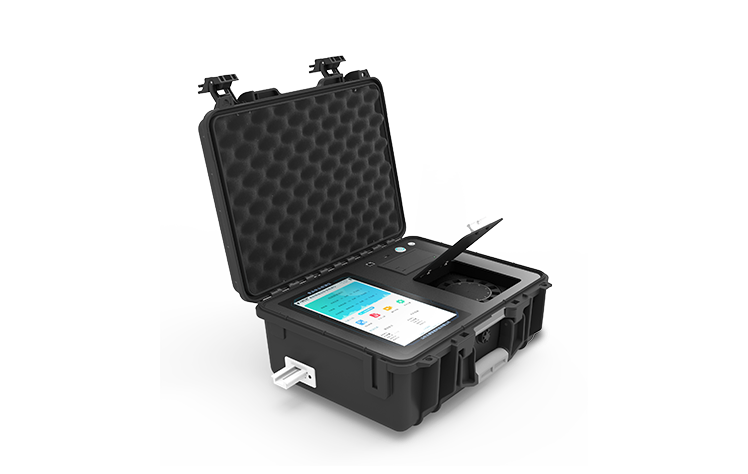
Yuntang YT-ZSB Soil Heavy Metal Detector Full Guide for Scenario-Based Selection
1. Q: Which Yuntang model fits grassroots agricultural stations for field soil preliminary screening? A: Yuntang YT-TR01 is the suitable option for grassroots agricultural staff who conduct scattered field sampling with limited sample quantities. It adopts a lightweight portable case, fitted with basic four-wavelength optical components and a simple 7-inch touch screen running entry-level Android firmware. It supports qualitative detection of lead and cadmium, powered by external mains without built-in lithium batteries. Only one sample can be tested per operation. Preprocessing operation illustrations are stored inside the machine for novice operators to follow. It lacks GPS positioning, cloud data synchronization and multi-channel synchronous testing modules, so it only works for sporadic on-site screening of farmland soil. Large-scale cultivated land surveys and third-party testing labs should not choose this model.
2. Q: Which Yuntang model is suitable for heavy metal detection in large-scale contiguous planting bases? A: Yuntang standard model YT-ZSB is recommended for large planting bases with batch soil sampling demands. It is equipped with a 12-unit rotary colorimetric cell and RK3288 quad-core 1.88GHz processor, paired with four-wavelength long-life cold light sources. The device can finish combined detection of arsenic, lead, cadmium, chromium and mercury within 60 minutes, and single-item testing of iron, zinc, manganese and copper takes 30 minutes. It integrates WiFi, 4G and GPRS triple wireless communication modules, plus wired network and USB data export ports. A built-in thermal printer outputs complete traceability slips with QR codes, and a 10-hour lithium battery supports vehicle power supply for field mobile sampling. Basic GPS coordinate recording and multi-user login functions are embedded to facilitate full-process archiving of base soil monitoring data.
3. Q: What core procurement strengths does Yuntang YT-TR60 have for third-party testing labs requiring quantitative analysis? A: Yuntang YT-TR60 serves as the high-end model for third-party labs that issue official test reports with legal validity. Its upgraded high-precision optical calibration system keeps linear error within 0.1% and two-hour absorbance drift below 0.001, fully complying with national quantitative detection standards. The machine reserves ports to expand detection items including fluorine, titanium, selenium and aluminum. It supports triple data backup via local storage, USB flash drives and cloud servers, and sets three-level access authorities for testers, reviewers and auditors. Matching complete digestion consumable kits are delivered, and the system can connect external A4 printers to output standard PDF test reports that meet official filing requirements.
4. Q: What is the matching logic of Yuntang YT-TRX07 for non-ferrous metal mine mobile pollution monitoring? A: Yuntang YT-TRX07 is customized for mine sites with scattered sampling points and unstable power supply. It retains all basic hardware configurations of YT-ZSB, while adding a thickened 6Ah lithium battery to extend continuous working time to 12 hours. The IP65 shockproof and waterproof case is thickened to adapt to gravel and rain in mining areas, and the GPS positioning chip is optimized for higher coordinate accuracy. Special digestion programs for mine tailings and industrial wastewater are pre-installed, and the offline local storage space is expanded to store thousands of sampling records in mountain areas without network signals. Data can be uploaded in batches after returning to the work station, fully covering long-term pollution tracing work around tailing ponds.
5. Q: What customized functional advantages does Yuntang YT-TR24 have for ecological environment law enforcement departments? A: Yuntang YT-TR24 shares identical optical and channel hardware with YT-ZSB, and adds exclusive GPRS directional data transmission modules for environmental supervision. All test data is encrypted and locked on the device to avoid arbitrary modification or deletion, and the system automatically marks over-standard samples with color highlights. The built-in printing template is dedicated to law enforcement evidence, which compulsively prints GPS coordinates, law enforcement numbers and sampling time. Offline encrypted cache prevents loss of on-site evidence data when signals are disconnected, and records can be pushed in batches to regional environmental supervision platforms after networking, forming complete evidence chains for soil pollution law enforcement.
6. Q: How does Yuntang YT-TRB match the demands of agricultural supply stores for free soil screening services? A: Yuntang YT-TRB is a low-cost single-channel color comparison device priced at 300 RMB, designed for agricultural stores to provide free preliminary screening for farmers. It has no electronic display screen, and staff judge lead and cadmium content by comparing sample color with printed standard color cards on the shell. It has no built-in battery, wireless transmission, printing or data storage functions, and only simple digestion reagents are provided as supporting accessories. It can only roughly judge whether soil heavy metals exceed limits without quantitative numerical output, so it cannot be used for official farmland surveys, law enforcement sampling and laboratory testing work.
1. Q: What core hardware gaps exist between YT-ZSB and entry-level YT-TR01? A: YT-TR01 only adopts a single fixed optical channel without rotary colorimetric cells, and cannot test multiple samples simultaneously. It is equipped with low-end single-wavelength light sources, leading to obvious numerical drift during long-term continuous testing. It runs simplified firmware without built-in preprocessing videos, GPS modules and wireless communication functions, and only stores a small amount of local data without traceable printing. In contrast, YT-ZSB is fitted with a 12-position rotary solid colorimetric cell and four-wavelength cold light sources of 420/510/590/680nm. The built-in constant current and voltage module automatically calibrates light intensity, with a service life of 100,000 hours. WiFi, 4G, wired network and USB multi-channel transmission, GPS positioning, multi-user authority management and other complete supporting functions are integrated, realizing batch, traceable and mobile detection for various industrial scenarios.
2. Q: What exclusive outdoor supporting functions are added on YT-TRX07 compared with standard YT-ZSB? A: The optical channel, processor and printing hardware of YT-TRX01 are consistent with YT-ZSB, with three major outdoor-oriented upgrades. First, the thickened lithium battery extends continuous operation to 12 hours to support all-day sampling in mountain mining areas without mains power. Second, the shell is thickened with shockproof and waterproof rubber strips reaching IP65 protection grade, and the GPS chip is optimized for more accurate coordinate recording. Third, special digestion programs for tailings and industrial wastewater are embedded, and offline storage capacity is doubled to store a large number of pollution point records in signal-free mountain areas. All upgraded configurations are targeted at the harsh sampling environment of mines, and there is no extra cost increase for agricultural and laboratory scenarios without mountain fieldwork demands.
3. Q: What are the differences in precision and expandability between YT-TR60 and YT-TRX07? A: YT-TRX07 only meets semi-quantitative screening for field surveys, with a linear error of 0.15 and absorbance drift of 0.002 within two hours. YT-TR60 upgrades the optical calibration assembly, controlling linear error within 0.1% and two-hour absorbance drift below 0.001, fully meeting the quantitative standard of official test reports issued by third-party labs. In terms of function expansion, YT-TRX07 only solidifies five soil heavy metal testing items, while YT-TR60 supports remote addition of fluorine, selenium, aluminum and other testing indicators, with three times larger local storage space. Three-level user authorities for testing, review and audit are set to standardize laboratory quality control procedures, which are unavailable on mine-oriented models.
4. Q: What exclusive supervision transmission functions does YT-TR24 have over the standard YT-ZSB? A: YT-ZSB only supports uploading data to general cloud platforms via WiFi and 4G. YT-TR24 adds a dedicated GPRS module to realize directional batch push of test data to municipal environmental supervision backends. Original test data is encrypted and locked by the system to prevent artificial tampering or deletion, and the system automatically classifies pollution degrees of over-standard soil samples. The exclusive law enforcement printing template compulsively outputs sampling coordinates and operator numbers, and offline cache data is encrypted to avoid loss of on-site evidence records. All customized modules are oriented to environmental law enforcement filing, and planting bases without regulatory docking demands will not generate practical value from these functions.
5. Q: What complete functional defects does low-cost YT-TRB have compared with all intelligent Yuntang models? A: YT-TRB has no built-in microprocessor, touch screen, automatic optical calibration and rotary colorimetric components. It relies on manual color card comparison without quantitative digital output, and lacks lithium batteries, wireless transmission, printing and permanent data storage modules. It can only work under fixed mains power, and cannot record sampling coordinates or generate archived test reports. It only achieves rough qualitative judgment of lead and cadmium, which cannot meet the standardization requirements of farmland surveys, environmental law enforcement and laboratory testing. All intelligent models including YT-ZSB are equipped with multi-channel synchronous detection, four-wavelength stable light sources and complete data traceability systems, forming obvious functional gaps with YT-TRB.
6. Q: What core practical value does the unified four-wavelength cold light source equipped on all intelligent models bring? A: YT-ZSB, YT-TR24, YT-TRX07 and YT-TR60 all adopt four fixed wavelengths of red, blue, green and orange cold light sources with a service life of 100,000 hours. The built-in constant current and voltage system automatically adjusts light intensity during testing to eliminate long-term temperature drift of light sources, keeping repeatability error within 0.03%. Each wavelength matches the color development reaction of corresponding heavy metals specified in national standards, enabling simultaneous combined detection of arsenic, lead, cadmium, chromium and mercury without replacing light source components. The solid 1cm colorimetric cell avoids mechanical displacement and shields external stray light interference to stabilize test data. Low-cost single-channel devices lack multi-wavelength matching ability, leading to unstable numerical values when testing multiple heavy metals at the same time.
1. Q: What is the complete test process of entry-level single-channel YT-TR01 for field soil screening? A: Connect the device to mains power and enter the built-in graphic operation guide. Prepare soil samples according to simplified digestion steps, pour the developed solution into standard cuvettes and insert them into the single optical slot. Press the test button, and the machine converts absorbance into rough numerical values, which need to be manually recorded on paper. The machine does not support automatic printing or GPS coordinate binding, and unsaved data will disappear after shutdown. There are no embedded operation videos; operators can only follow paper manuals for reference. Only one sample can be processed each round, so large-scale soil sampling requires repeated repeated operations, which greatly increases manual workload.
2. Q: What is the standardized batch detection process of YT-ZSB with 12 channels? A: Turn on the machine via lithium battery or vehicle power supply and log into the test account on the touch screen. Open the built-in preprocessing video and digest 12 soil samples simultaneously. After color development, place cuvettes into the rotary colorimetric cell and close the light shielding cover, then select the combined heavy metal test program. The machine automatically switches four wavelengths to scan all channels and generates complete data within 60 minutes, marking over-standard samples by comparing with national standard thresholds. Users can upload data to the cloud in batches via WiFi or print traceable receipts on site. GPS can be activated to bind sampling coordinates for field work, and offline records will be uploaded automatically after networking without repeated sampling. All operation steps are guided by Chinese pop-up prompts for novice staff to master quickly.
3. Q: What is the complete sampling operation flow of YT-TRX07 in mine pollution sites? A: Fully charge the thickened lithium battery before entering mountain mining areas. Create exclusive storage groups for tailing and surrounding soil samples after power-on, and turn on high-precision GPS to record sampling coordinates automatically. Digest 12 groups of pollution samples at the same time and start multi-metal combined testing. When there is no 4G signal in remote mountain areas, all records are stored locally in encrypted form. After returning to the factory, connect WiFi to synchronize all data to the cloud platform in batches. Special digestion videos for wastewater and tailings are stored in the machine, and an automatic dilution calculation program is embedded for high-concentration pollution samples. The thickened shell can be directly placed in gravel and rain environments without additional protective packaging.
4. Q: What is the standardized quantitative test process of YT-TR60 for third-party testing labs? A: Log into the three-level administrator account and input complete commission information including inspection unit, sample number and operator data. Digest 12 groups of samples and put them into the high-precision rotary cell, then start the quantitative test program. The four-wavelength system automatically cycles calibration to eliminate optical drift during long-term testing. After detection, data can be backed up in three ways: local storage, USB flash drive and cloud server. Standard PDF reports can be exported and printed via external printers, and the system supports expansion of multiple heavy metal testing items. Reviewers can call up original absorbance curves for data recheck, fully complying with laboratory quality control specifications for issuing official test reports.
5. Q: What exclusive on-site evidence collection operation steps does YT-TR24 have for environmental law enforcement? A: Activate vehicle power or lithium battery for field law enforcement, and log into the dedicated law enforcement administrator account. Turn on GPS to lock the coordinates of polluted plots, then digest soil and irrigation water samples for 12-channel synchronous testing. The system highlights over-standard data in red and encrypts all evidence records to prevent modification. Traceable law enforcement receipts with unique QR codes can be printed on site, and data will be pushed to regional environmental supervision backends via GPRS after returning to the office. The machine embeds national standard pollution classification thresholds to automatically divide light and heavy pollution levels, forming complete electronic and paper evidence chains for on-site law enforcement.
6. Q: What is the simple screening operation flow of YT-TRB for agricultural stores? A: Connect the device to household mains power. Collect soil samples from farmers and conduct simplified digestion treatment. Pour the developed liquid into matching cuvettes and insert them into the optical slot. Compare the liquid color with printed standard color cards on the shell to roughly judge whether lead and cadmium exceed limits. The machine has no electronic digital display, printing or data storage functions. Staff can only orally inform farmers of preliminary screening results without generating any archived test records, and it cannot be used for official farmland surveys or regulatory sampling work.
1. Q: What is the daily cleaning and maintenance procedure of entry-level YT-TR01 after field use? A: Cut off power after daily sampling, and wipe the single-channel optical window with dust-free soft cloth to remove residual digestion liquid stains that may corrode optical lenses. Erase soil mud on the shell and store the machine in a dry cloth bag away from direct sunlight. Clean dust on the power interface with a brush every month. The machine has no rotary transmission components, and rough paper towels are prohibited from contacting lenses to avoid scratches. There is no automatic optical calibration function embedded; operators need to manually calibrate with standard solutions every quarter. Regular daily cleaning can effectively reduce numerical deviation caused by long-term soil and reagent pollution in farmland.
2. Q: What are the daily and monthly hierarchical maintenance rules for YT-ZSB 12-channel model? A: Daily maintenance: Cut off power and wipe the 12-position rotary cell and optical lenses with anhydrous ethanol to remove residual digestion liquid. Erase dust on the touch screen and communication interfaces, then plug dust-proof plugs and wipe mud on the shell before storing in a dry place. Monthly maintenance: Run the one-click light source calibration program embedded in the system, clean paper scraps in the printer, and complete a full charge-discharge cycle of the lithium battery before backing up monthly data via USB. Check the aging condition of the shell sealing strips every week. Standard hierarchical maintenance can stabilize the 100,000-hour service life of light sources and keep repeatability error within the standard range for long-term batch detection.
3. Q: What targeted maintenance plan for YT-TRX07 in high-pollution mine environments? A: Thoroughly clean residual high-concentration tailing digestion liquid in the rotary cell after daily mine sampling to avoid corrosion of optical components. Wipe rain and mineral dust on the thickened waterproof rubber strips of the shell with soft cloth, and store desiccant inside the storage bag for mountain humid environments. Execute full-channel optical calibration every two weeks, and complete a full charge-discharge cycle of the thickened lithium battery every two months. Back up all mine sampling records via USB every half month to avoid data loss caused by equipment failure. Check the integrity of the shockproof shell after bumping on gravel, and replace damaged sealing strips in a timely manner.
4. Q: What monthly professional maintenance flow of high-precision YT-TR60 for laboratories? A: Wipe all 12-position cuvettes and optical lenses with anhydrous ethanol after daily laboratory testing. Execute two rounds of light source calibration every month, and use standard potassium dichromate and copper sulfate solutions to recheck linear and repeatability errors. Back up experimental data in three ways including local storage and USB flash drives every month. The administrator account can clean invalid commission records regularly. Place the machine in a constant-temperature laboratory to avoid optical drift caused by temperature changes, and only use special lens cloths to wipe optical components to prevent scratches.
5. Q: Complete moisture and dust prevention maintenance for field law enforcement YT-TR24 A: Wipe residual digestion liquid in the rotary cell after daily law enforcement sampling, and clear soil dust on GPRS and USB interfaces before plugging dust-proof plugs. Leave the shell open for 15 minutes to disperse internal water vapor after rainy sampling before locking the box. Run one-click full-channel light calibration every month, and back up encrypted evidence records via USB every half month. Calibrate the built-in clock every month to ensure the time on legal receipts is accurate. Check the aging degree of shell waterproof strips regularly to prevent water vapor from entering and damaging internal circuits during field work.
6. Q: Low-cost daily maintenance methods for simple YT-TRB used in agricultural stores A: Rinse matching cuvettes with clean water after each farmer screening and air-dry them naturally. Wipe the simple optical window with soft cloth to remove fingerprints and stains. Store the machine in a dry agricultural warehouse away from volatile chemical fertilizers and digestion reagents. Clean dust on the power interface every week. There is no automatic calibration program; operators need to compare with standard color solutions every quarter to check judgment deviation. The machine has no rotary transmission or built-in lithium components, so maintenance procedures are extremely simple without high-cost regular overhaul items.
High precision pesticide residue detector
2024-04-02 2068
2068Food comprehensive analyzer
2022-12-202086Rotary food safety detector (without gold label)
2022-03-042266Rotating food safety detector (single gold standard)
2022-03-012022Rotary food safety detector (double gold label)
2022-02-251938Rotating food safety detector (three gold standard)
2022-02-255127Rotary food safety detector (box type 8-channel)
2022-03-011915Rotary food safety detector (box type 12 channel)
2022-02-251882WeChat:+86 17865361250
WhatsApp:+86 18866361895
Email:yuntangzhineng@foxmail.com
Copyright @ 2019-2022 Shandong Yuntang Intelligent Technology Co., Ltd All Rights Reserved. Copyright Source manufacturer of pesticide residue detector, food detector, bacteria detector
 WeChat


TOP
 Leave us a message